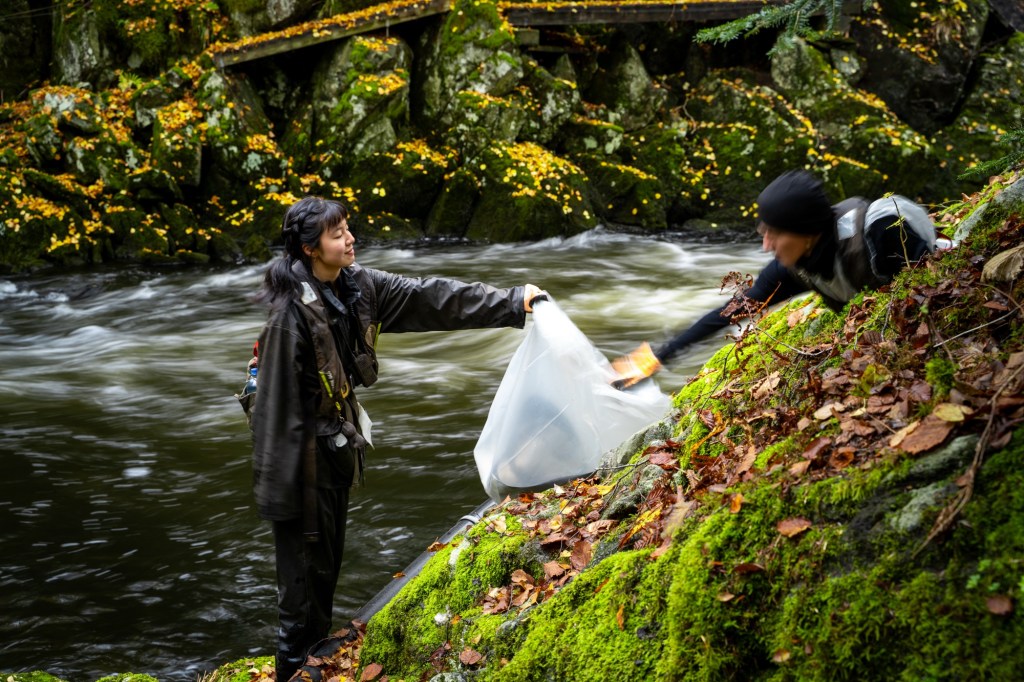
When I told my friends I was going to live in Norway for six weeks to clean the rivers and fjords, they typically responded saying “wait?? Norway has trash?” And frankly, I thought the same. If I close my eyes and imagine Norway, I think of fuzzy reindeer prancing over transcendent alpine tundra, killer whales traveling up icy cold fjords, and northern lights illuminating a seemingly pristine country. But in six weeks, our team cleaned 7.4 tons (16,300 pounds) of trash out of polluted waterways and there’s still more to find.
I initially found this project through WorkAway, a website to connect volunteers from abroad with interesting projects around the world. The posting was from Norges Miljøvernforbund or NMF (A Norwegian Environmental Agency) and was looking for enthusiastic and outdoorsy volunteers to help clean up the rivers around Bergen, Norway. I applied, crossed my fingers, and waited incredibly impatiently.
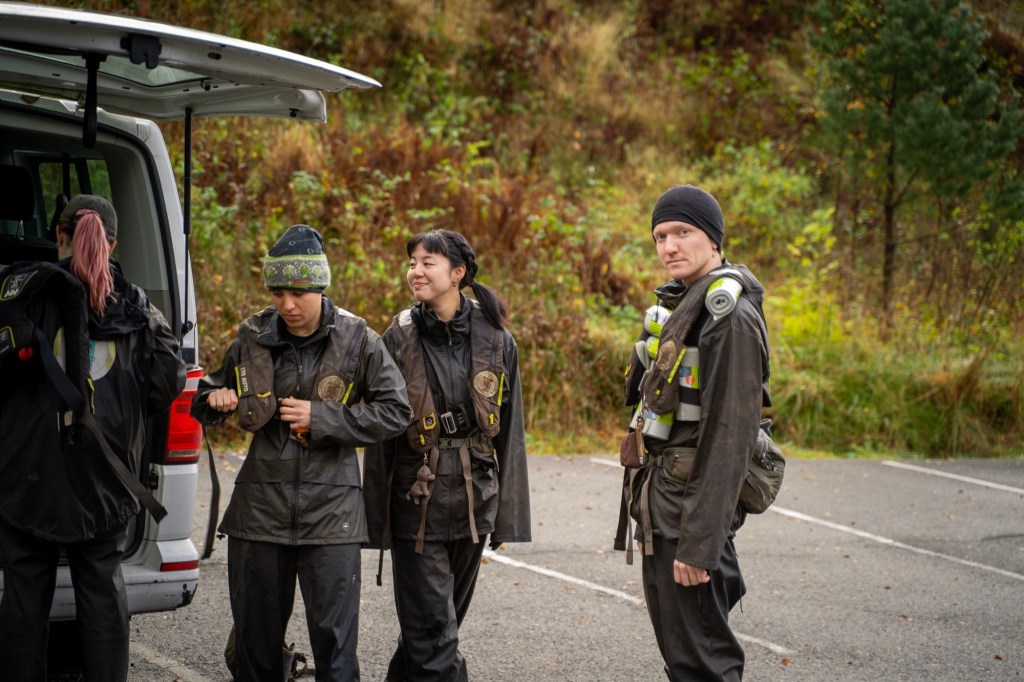
Luckily, I was accepted and, a few months later, I was picked up by the team in the trusty “rent-a-wreck” van. Our team consisted of Kaja, our group leader from Norway, Florian from France, Josephine from the UK, Tyra from South Africa, and Ellie from the United States. The WorkAway said we’d be living in Bergen, so I expected to be in an urban environment, but we drove 25 minutes south-east and left the city behind. We turned onto a single lane dirt road and drove through a thick moss covered forest before arriving at Seletun, our home for the next six weeks!!
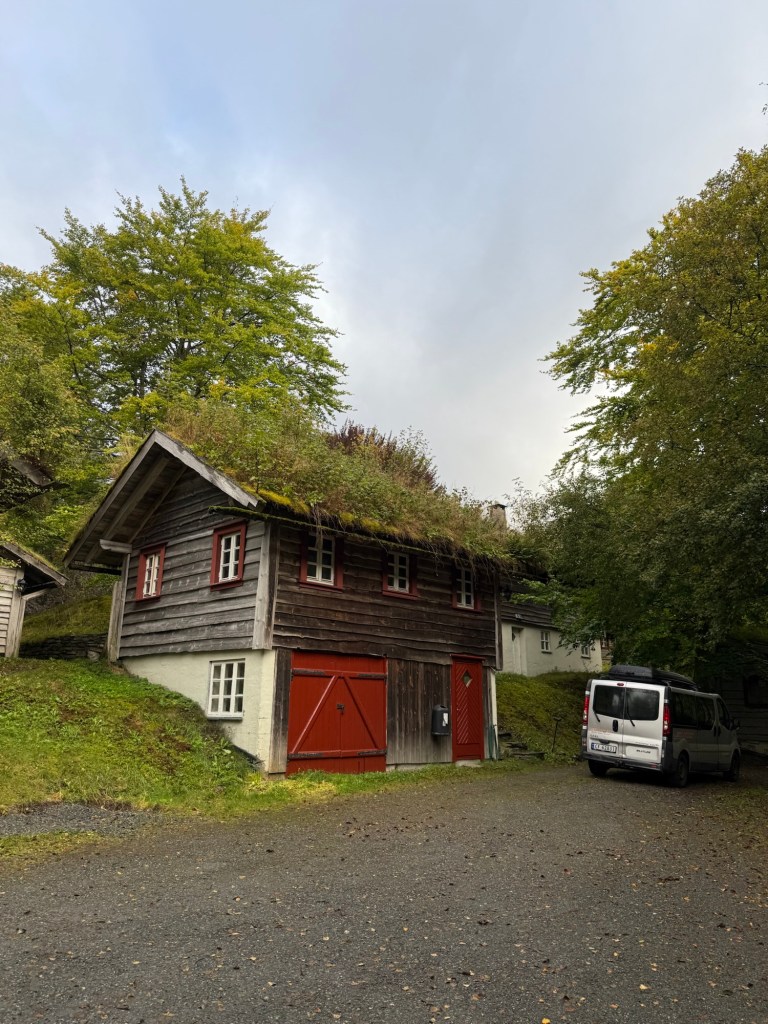
The property sits on a peninsula surrounded by the beautiful Hauglandsvatnet lake. The main building is a unique hodge-podge of different traditional buildings from across Norway. Each one was carefully taken down, brought to Bergen, carefully put back together, and connected with hallways. The property works sustainably with a low energy water system from the lake, fancy vacuum toilets, moss insulation, a moss covered roof, a wood stove, and most likely some other cool things. There are six bedrooms, a dining room, an industrial kitchen, a bar, a classroom (movie theater), a drying room, and a walk in refrigerator. There were a couple of other buildings around the property as well, but we never used them. We settled in, made some curry for dinner, and Florian and I started our band with a guitar, tin whistle, and harmonica.
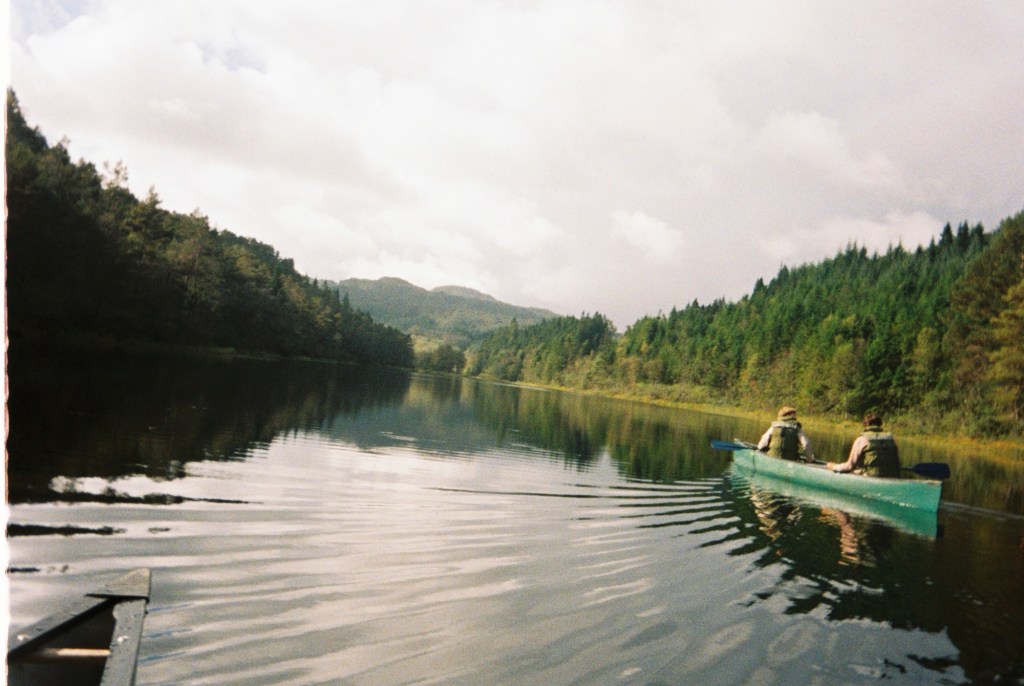
This project was a pilot program or a test for NMF to see how effective river cleaning is. One idea was to use canoes to access trash, so our first day was spent on the lake to hone in on our canoe skills. We first paddled south to where the river narrows. We glided over smooth flowing eelgrass and under more rainbows than volunteers in this project. We then paddled back under the bridge, past Seletun, and made it quite far the other direction before making landfall for lunch. We sat on thick moss and began to understand the strange weather patterns of Western Norway. Rain and sun would come and go interchangeably, often leading to rainbows when the two coincided.
September 18th marked our first day of river cleaning. We first drove to the NMF office in downtown Bergen to pick up gear. This wasn’t a stereotypical bleak office, but one filled with big maps, art, portholes, big windows looking over the marina, and information about various environmental projects.
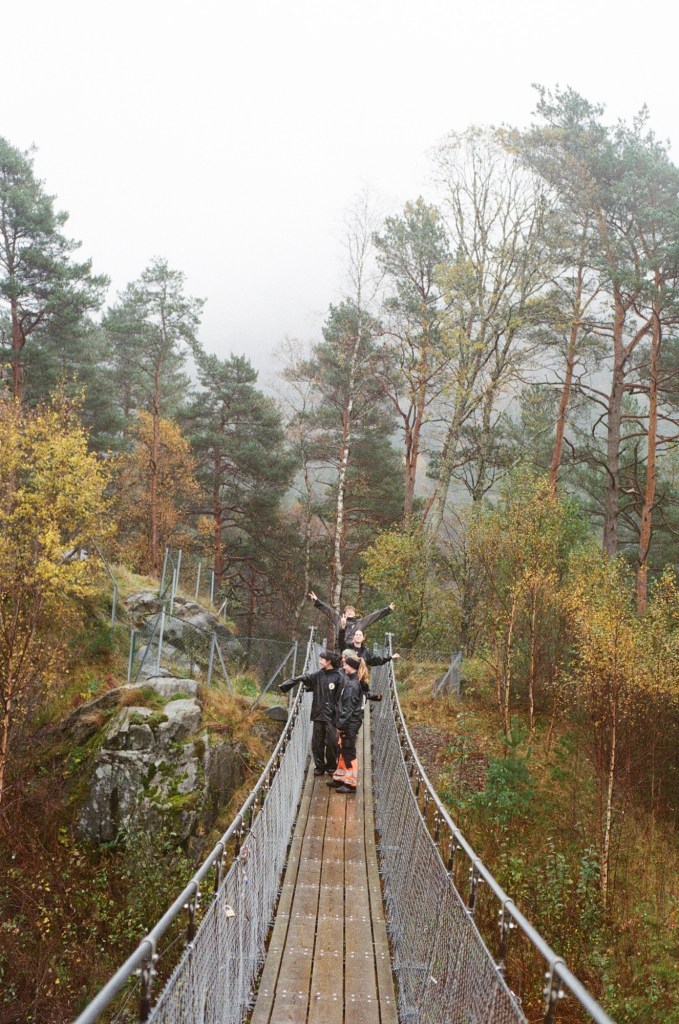
Our first objective was the clean the 7km Arna River. I felt prepared with my welly boots, rain gear, and inflatable life preserver. Unfortunately, I only stayed dry a matter of minutes as my first step in the river was thigh deep and cold water filled my boots. We split up into two groups and moved slowly. The water was deep and the banks were thick with vegetation which made retrieving each piece of trash a serious endeavor. We cleaned 1.5 kilometers in almost six hours. The work was new to us and we began to build strategies. We left piles of our collected trash (called depots) on the side of the road to be picked up at a later time. We were quite surprised when we heard Florian say on the walkie talkies “Hi Kaja! I found a gun.” Fortunately it was only a toy and we didn’t need to notify the police, though it looked quite real. By day two, we were already significantly more efficient and were able to power through to the end of the Arna River. Tyra and I took the west bank and were surprised by a series of boardwalks along the river’s edge. We walked along suspended above raging waterfalls without seeing a piece of trash for some time. The boardwalks were made for fly fishing and helped us immensely.
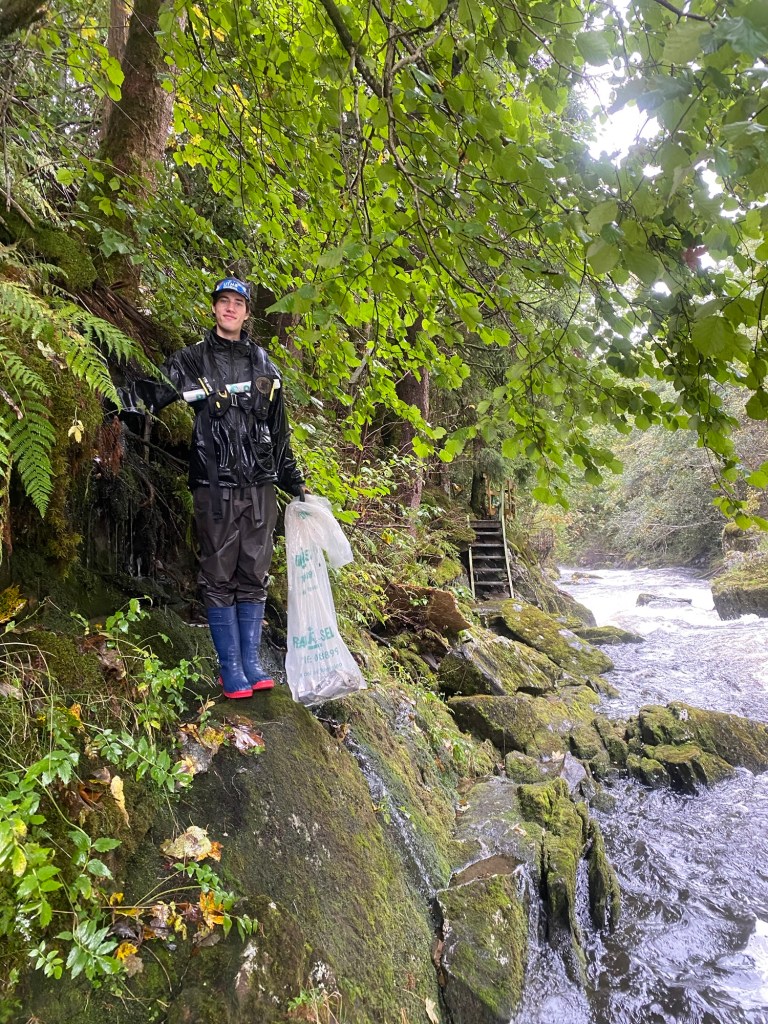
We left the riverside once the fisherman path ended and walked by a cemetery and some large tractors before finding a way back down. The river then flowed underneath the Indre Arna train station before flowing out into the bay. Our first river complete! We celebrated with tacos and card games once we returned to Seletun.
Our second river, Ljoselva, flows south off the mountains and through the small city of Nesttun. Our first day was a challenge. Josephine and I worked together and faced a thin strip on jungle with fast moving water to our left and a barbed wire fence to our right. We fought our way through, but our bags began to fill up and moving through became even more difficult. I kept on finding soccer balls as well which filled up my bags quickly.
The river made a long meandering switchback and the entire turn was a large private trash dump from an industrial site. We spent time systematically moving up and down the long, steep bank filling bags with a wide assortment of things. We’d then haul them back across the river, along the bank, and finally to our depot at the cemetery. The water level was too high to reach some areas, but once the level lowered, we returned and unlocked more trash. Some shopping carts were buried in mud and only partially revealed from the gap in storms. Our pile included many shopping carts, computers, car batteries, tires, bike parts, styrofoam and typical consumer trash like a bottles, cans, plastic bags… After the U-bend, the river splits in two around what we called “trash island.” When the water levels rise, trash island becomes a garbage magnet. Kaja and I crossed onto the island and began picking. As expected, a greater than usual amount of trash was stuck in the small trees and bushes throughout. Most notably, Kaja found a toy pirate sword, a functional and charged Bluetooth speaker, and I found endless styrofoam.
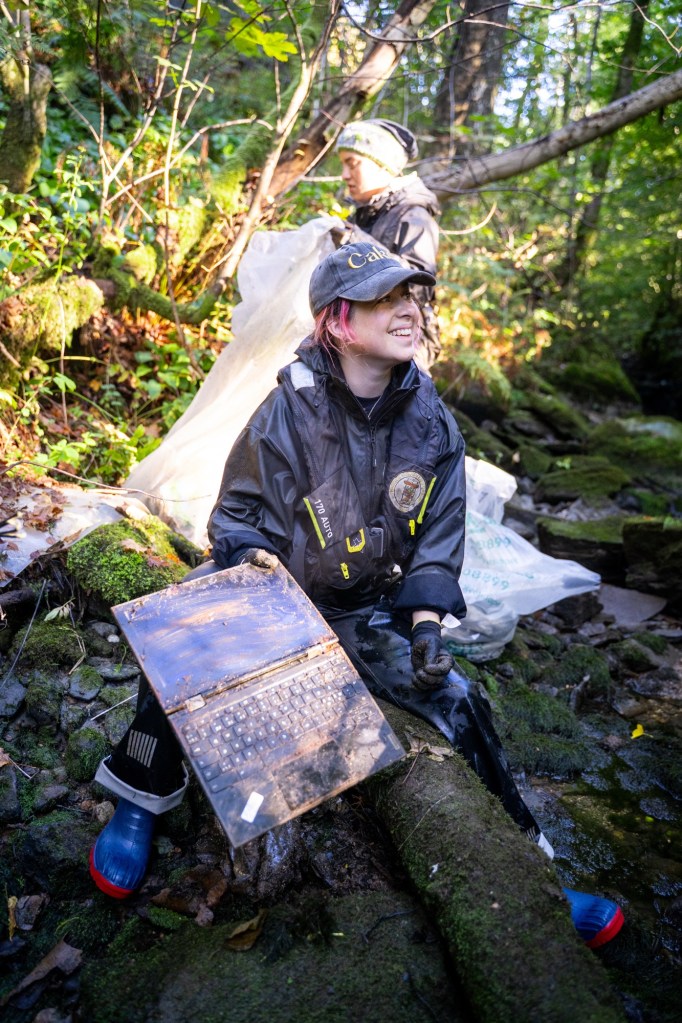
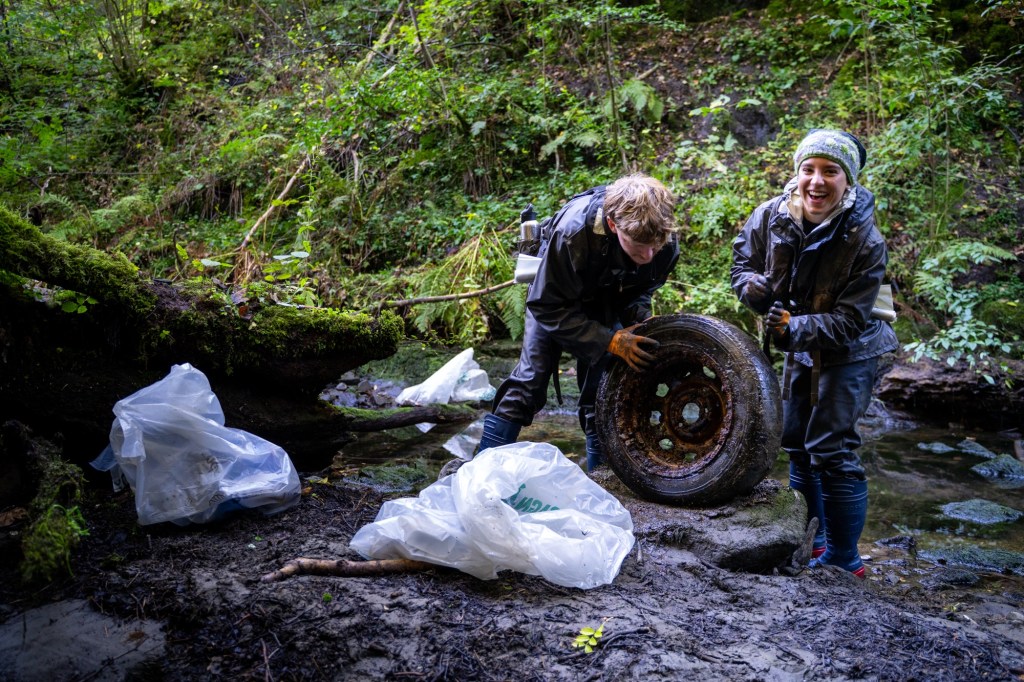
The next section was below a road with a handful of bridges spanning over the river as we inched closer to central Nesttun. We hopped the fence off the road, dropping down a large retaining wall to access the river. The more urban setting brought more urban trash including electric scooters, traffic cones, and of course plastic bottles and bags.
At one point, Tyra hauled a bike up from the river bank, peeked into the saddle bag, and found small Easter egg toys that seemed suspicious. She couldn’t open the eggs with her gloves on, so the bike and bag were left in the depot. A day later, we received news from Henrik, the nice guy from NMF who picks up our depots, that the Easter eggs contained small packets of white powder, assumed to be cocaine. Tyra’s senses were on point and Henrik disposed of our most unique find down the toilet.
We finished the upper section of the Nesttun River on September 26th with a grand total of 2180 kg or 4806 pounds. Though, if we cleaned in any other season, the total would be much greater. The constant rain kept the water levels high so we were unable to clean some parts.
On day 7, we were nicely rewarded with an ocean day to get a change of scenery while still cleaning trash. Since 2017, NMF has actively worked to clean marine pollution with over 3,000 volunteers. The results are impressive as they’ve hauled in over 300,000kg of marine litter and educated over 40,000 students.
To better understand pollution levels, NMF has a handful of areas that are cleaned 3x per year with the amount of trash being recorded. We took the small workboat named “Buster” to one of those areas to complete the tri-yearly clean. We marked the bags from the special area before taking the boat over to a bird sanctuary. Fortunately, the views of the outer islands were beautiful and very little trash was actually found. We split up into groups and systematically scanned the island. At one point I heard Josephine over the radio saying “Florian is wondering if he’s allowed to pee on the island even though it’s a bird sanctuary.” Henrik responded saying “yes it’s allowed. As long as he doesn’t pee on a bird.”
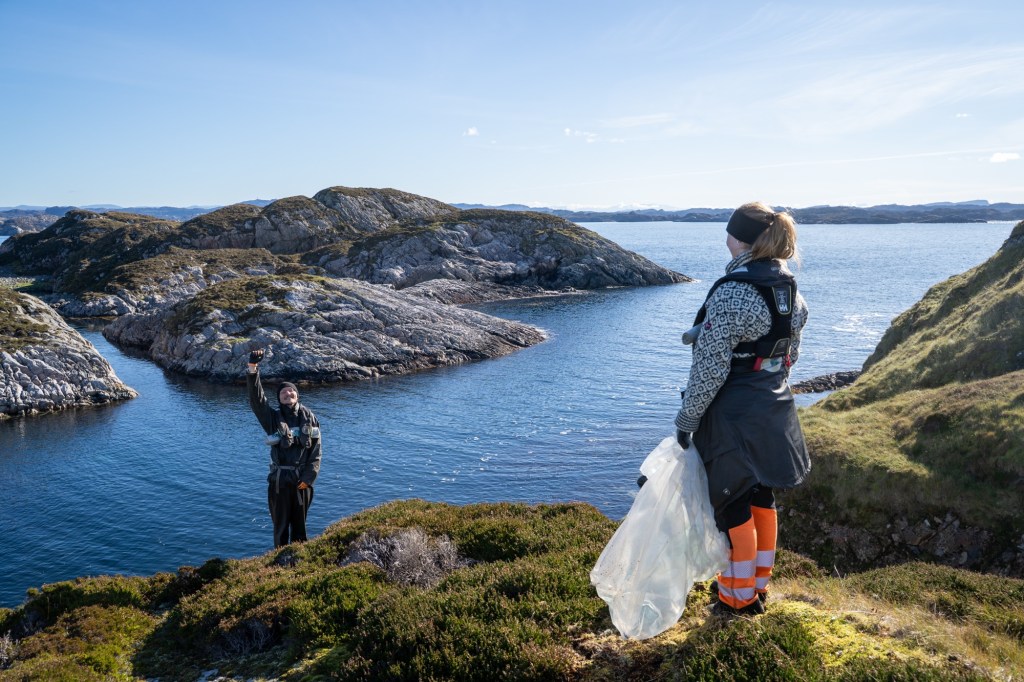
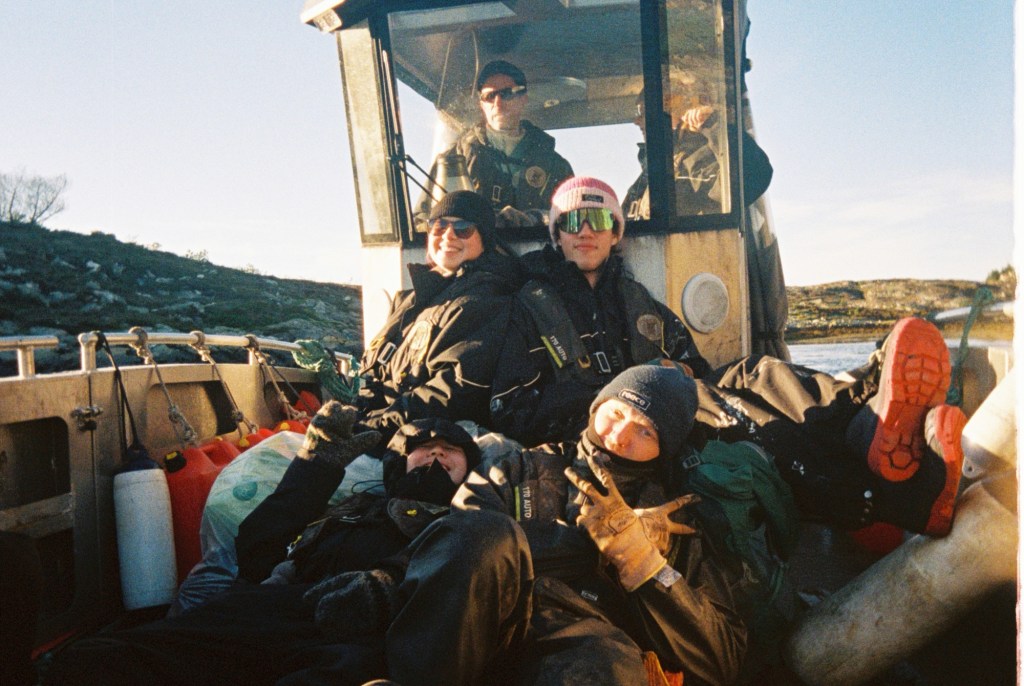
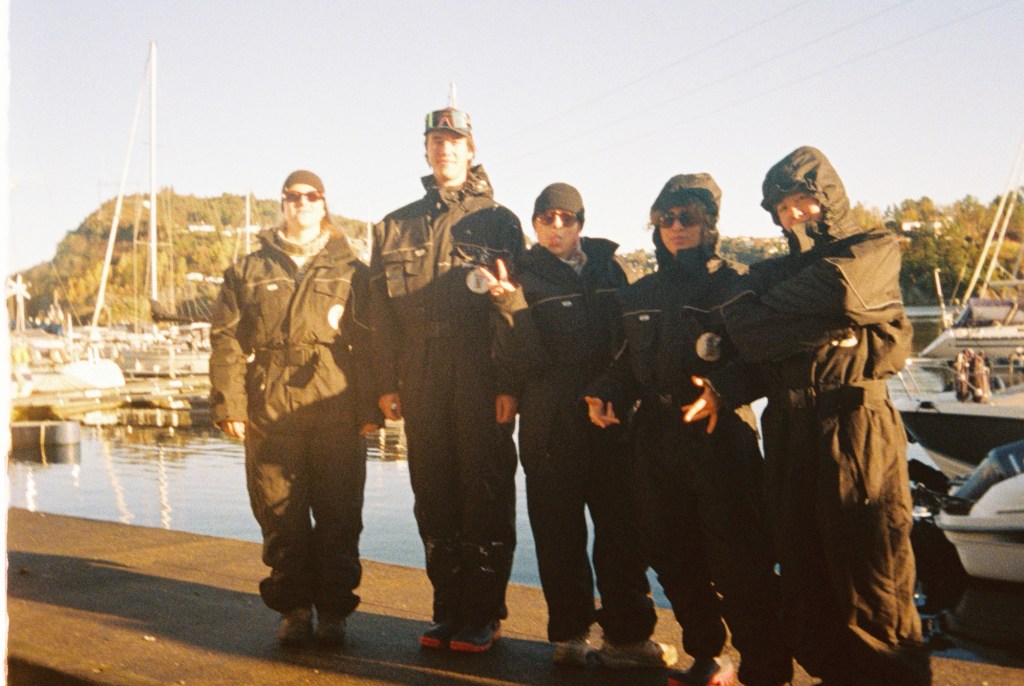
We then returned to the harbor, picked up Rueben and Ida, who work for NMF, and took the boat to Ullnøya, our last cleaning area of the day. We were as far west in the Bergen archipelago as we could reach and the western sea proved empty until the Shetland or Faroe islands. We indulged in a grand picnic, before all falling asleep with full stomachs in the rare sun. My last thought before my eyes fluttered shut was “I’m sprawled out basking like a reptile surrounded by great people on a remote island in Norway. What a life!” The sun was on its way down when we began to clean. The section of island we cleaned worked as a funnel for trash. Large waves from storms surge waves far up into the V-shaped cove and everything gets left for us to pick up. The worst of which was a five-foot wide stone corridor whose floor rose several feet from a terrible mixture of small pieces of plastic with dirt.
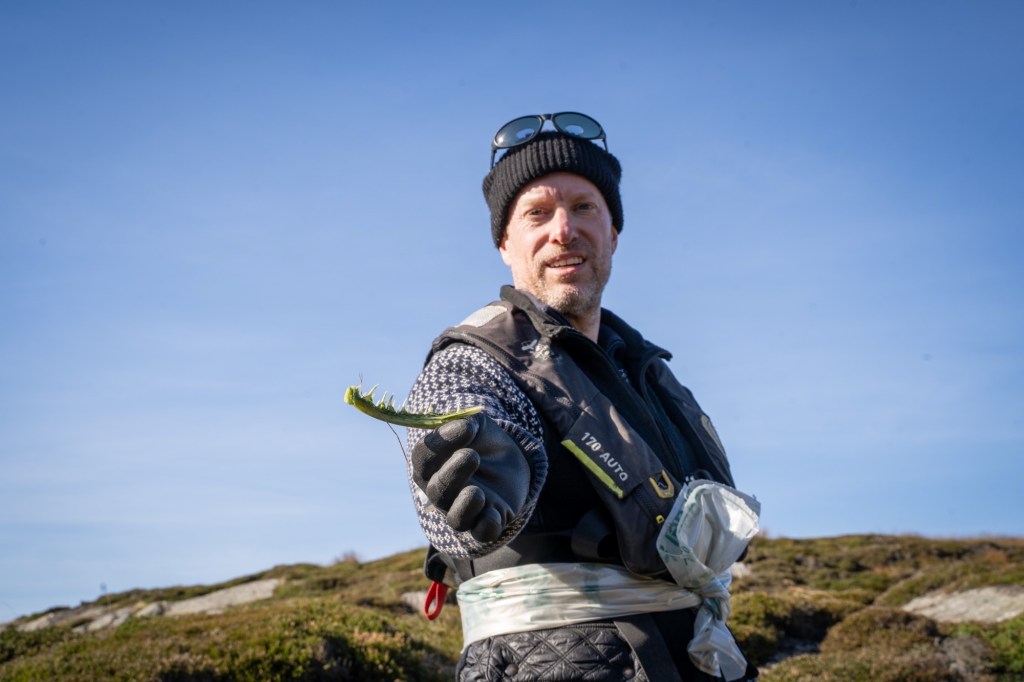
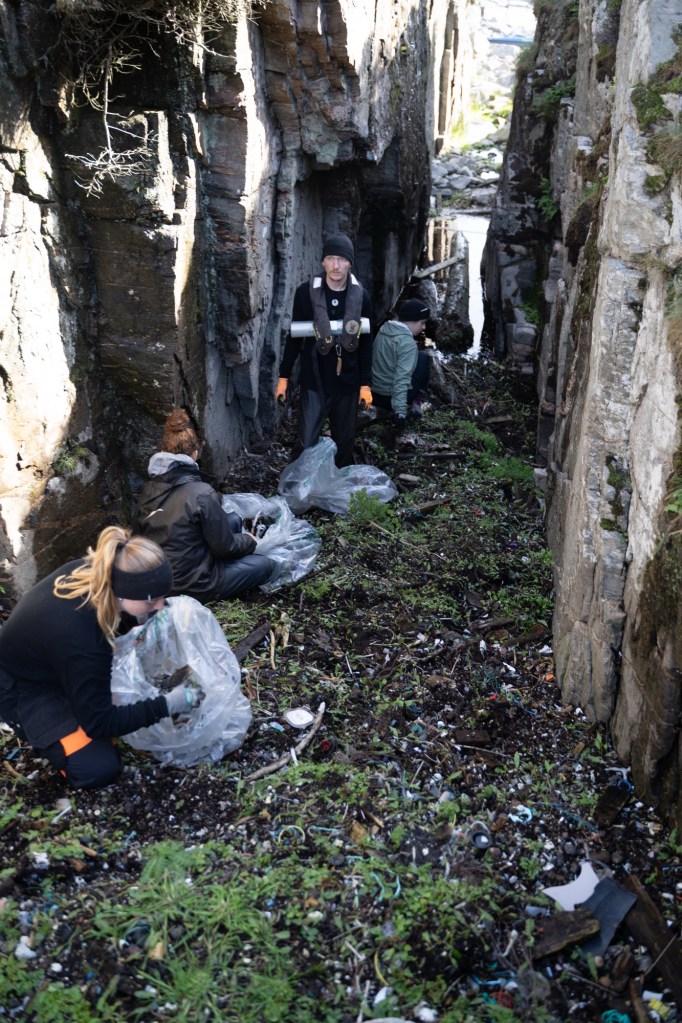
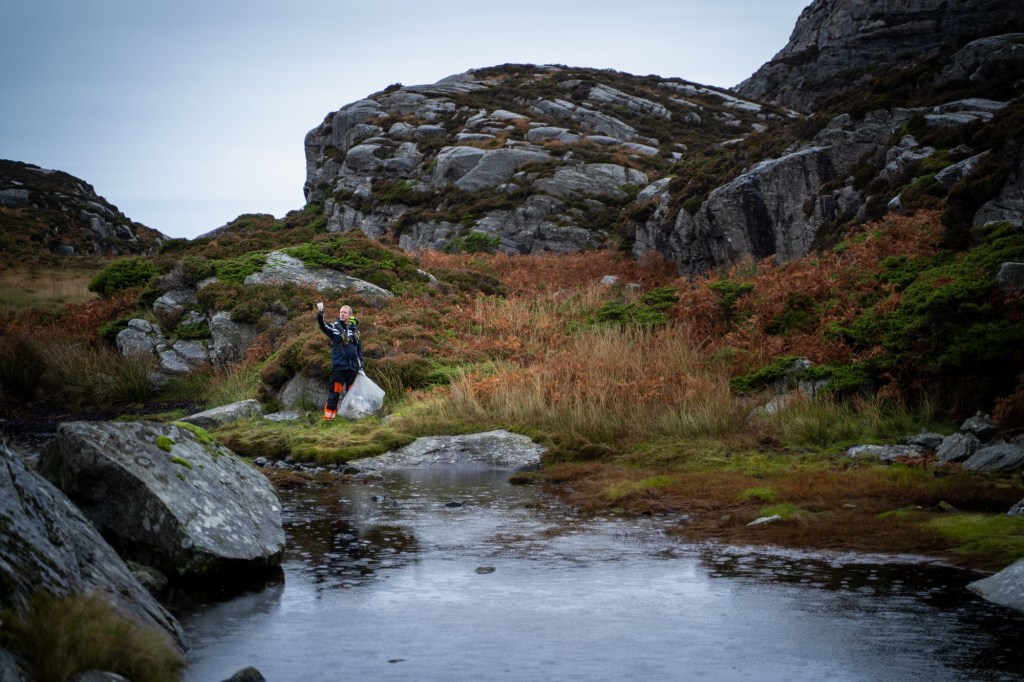
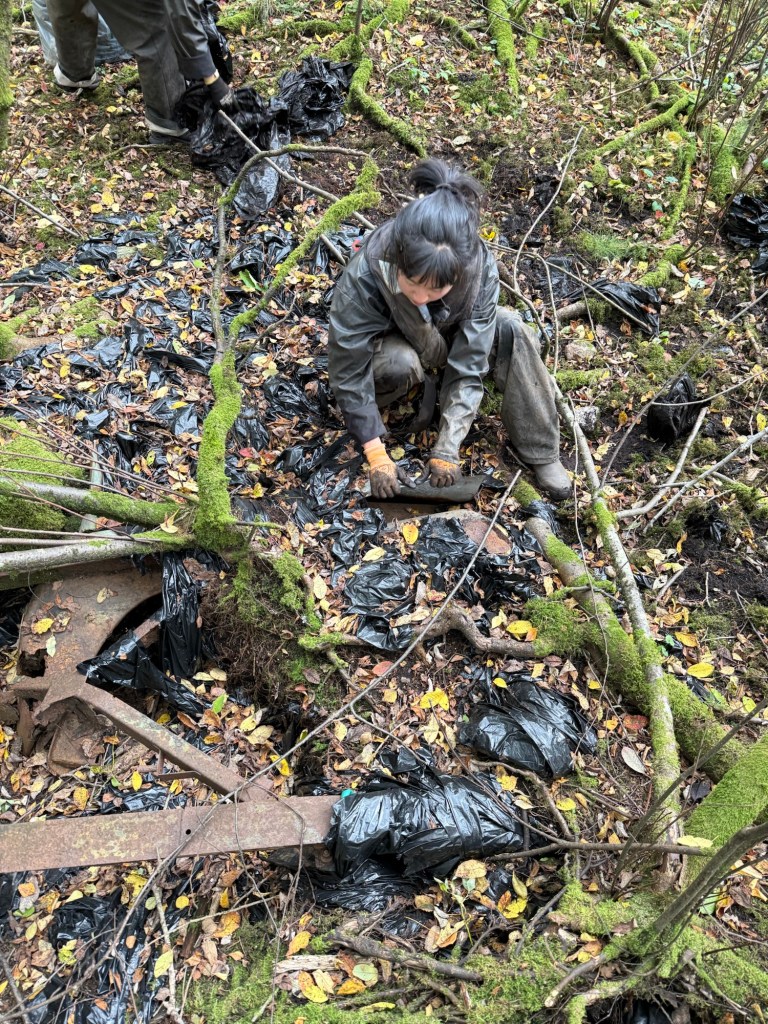
The following section comprised of four small lakes with shorter river sections between. We made quick work of the shoreline, finishing more than half of the lakes in a days work. We cleaned some front lawns, through tall grasses, and rocky underpasses. The following days success was made possible by good thinking on Tyra’s part. The river or lake sat 10-15 feet below the road and Tyra used a rope and hook to haul everything from electric scooters to tires to metal pipes up to the road level.
October 1st brought us to the largest of the four lakes. Kaja and I canoed, while the other four moved by land. We systematically moved around the lake while spotting and picking trash which got progressively more difficult as the wind picked up. Some of the trash was stuck underwater and was a serious feat to retrieve without tipping the canoe.
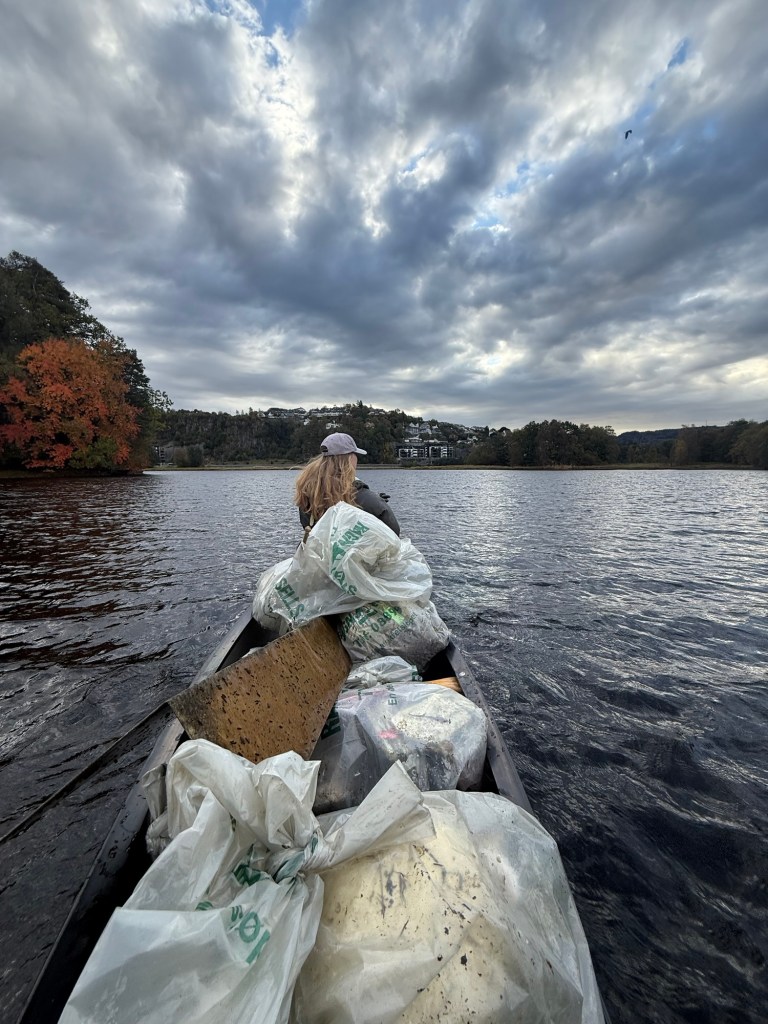
As the end of the day neared, our trash picking canoe service turned into a transport service as we brought all the trash and brave river cleaners back to the van. We made an impressive pile and were all seriously exhausted. A nice man came to ask us about our work and we explained that we’re volunteers from around the world here to clean up rivers with NMF. He was thankful, but also confused as his company spends one day a year cleaning the lake that we just cleaned. He said they usually don’t find much and was baffled by how much we were able to collect.
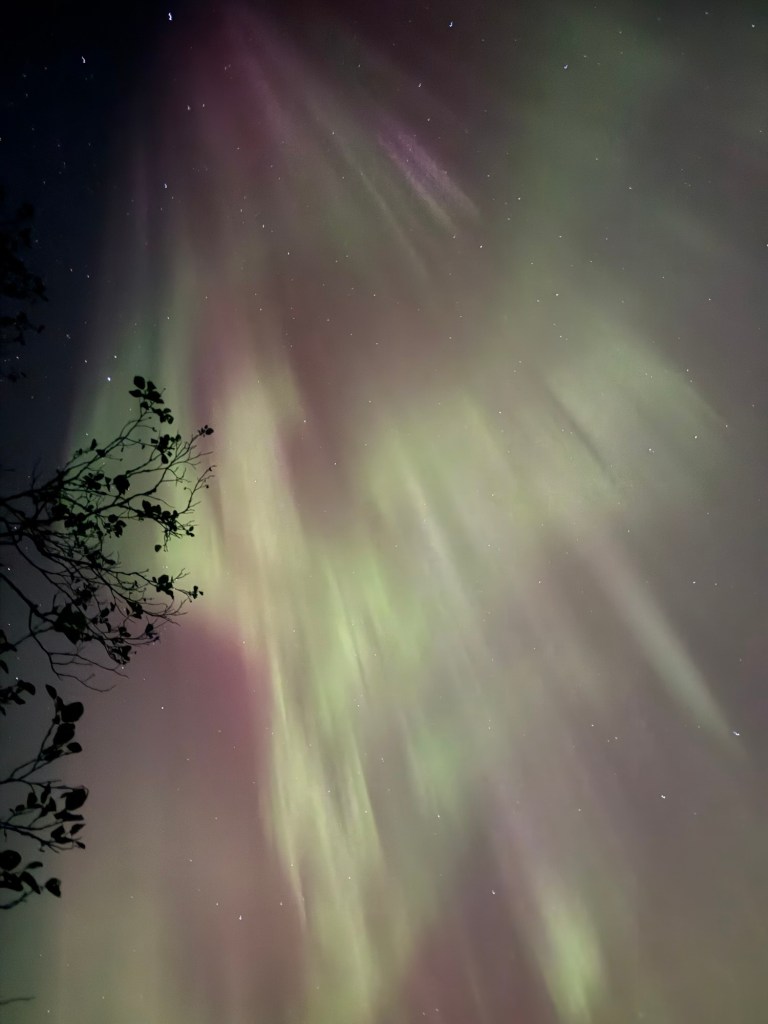
Florian and I both had apps on our phones to alert us if the northern lights could be seen in our area. Bergen is at 60 degrees north, still 414 miles south of the arctic circle, but we were both hopeful. We even had a NMF River cleaning bucket list which included seeing the Aurora, so it had to happen. On September 29th, the conditions seemed right, so we all sat upon the lake’s edge and looked north. We optimistically stared at a faint glow at the northern horizon waiting patiently. We serenaded the nocturnal forest animals with our musical talents until the faint glow turned into defined glowing green pillars. We glimpsed at the heavens through a window in the clouds with smiles on our faces. When the clouds shut, we returned to our cozy house, satisfied with the evening.
The following evening brought an even brighter show of the aurora, with endless clear sky above. The lights rapidly expanded south, going from a dim glow on the horizon to a bright dance above our head within minutes. We watched in awe, and then they disappeared as quick as they came. I sat upon the grassy knoll above the starlit waters edge, guitar in hand for another few hours in case the Aurora reappeared before finally heading to bed.
We began our third river, Haukåselva, on October 3rd. I cleaned one side with Tyra and Ellie and we managed to remove over 200kg in two and a half hours.
That night, the NMF professional beach cleaning team arrived to stay for a few days and together prepared for the incoming tropical cyclone. The wind picked up and, by early evening, we lost power and were playing cards and singing by candlelight. The wind whipped and raced through the night shaking the house. Four trees fell on the property, including one 70+ foot tree, landing right upon the water filter shed. The storm, named “Amy,” was the fifth strongest in Bergen history. We lived by candlelight and were able to disconnect from the greater world. Somehow, Seletun became even cozier. After some local farmers cleared the fallen trees from the road, some of us bought battery powered lights and drinking water while Carol and Henrik saved one of NMF’s boats from fully sinking. Henrik said the boat would have completely sunk if left alone for another few hours. We ate a mighty dinner and were happily forced to eat lots of ice cream as the freezer didn’t work.
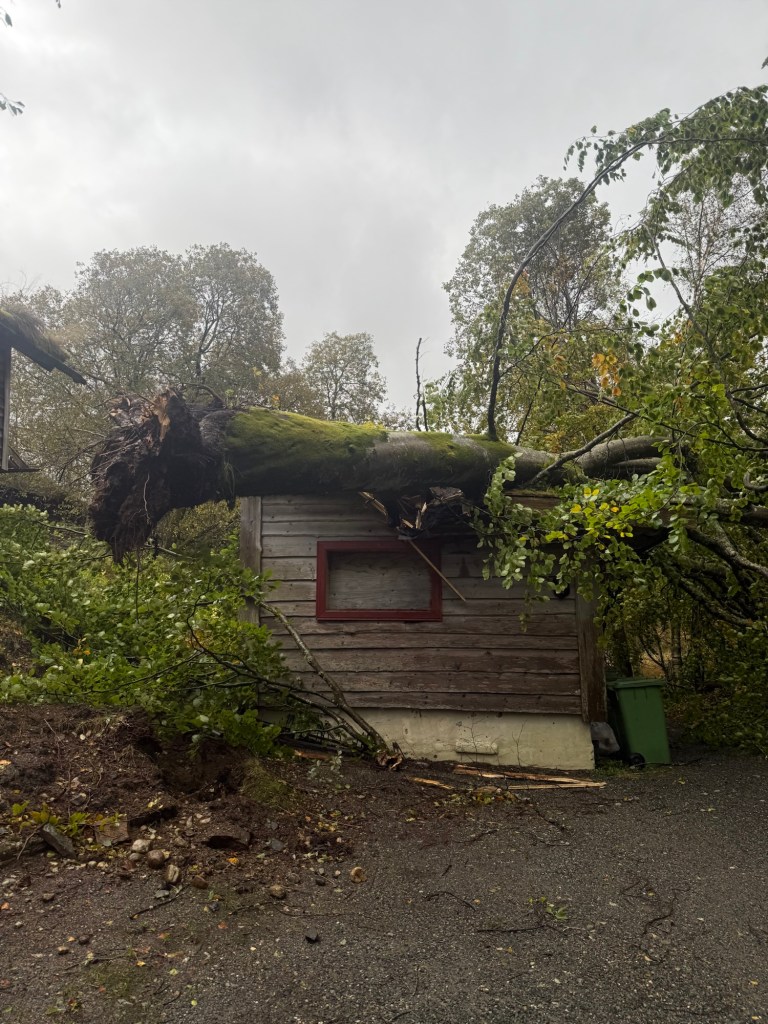
The next few days were void of river cleaning and involved much rest and driving to the nearby grocery store to use the bathroom.
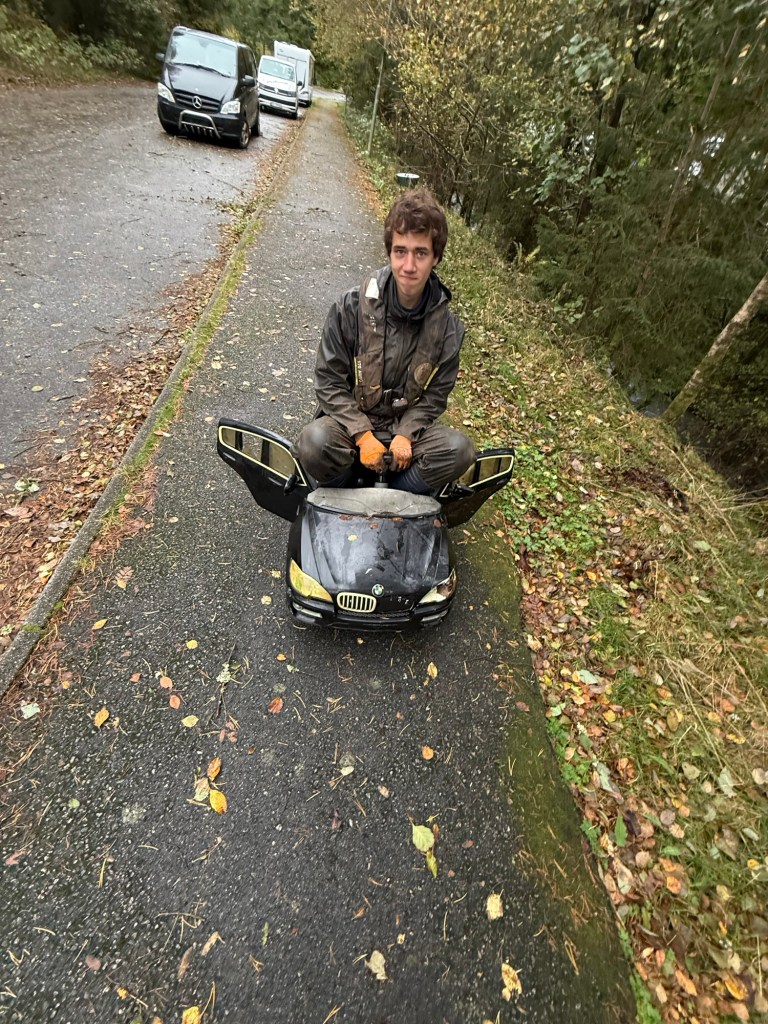
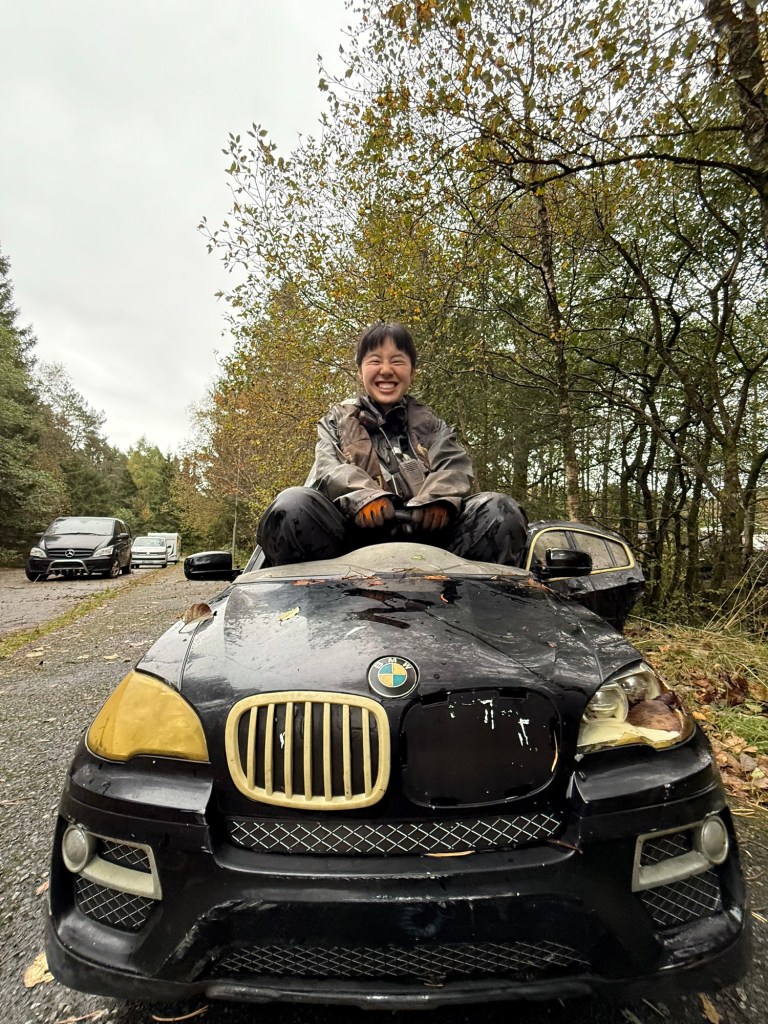
Once we regained power, we began where we left off on Haukåselva. Perhaps my favorite find was on October 6th, when Ellie stumbled across a fancy BMW! It was about three feet long, and made of plastic. Ellie and I spent a long time pushing each other down the hill and swerving all around.
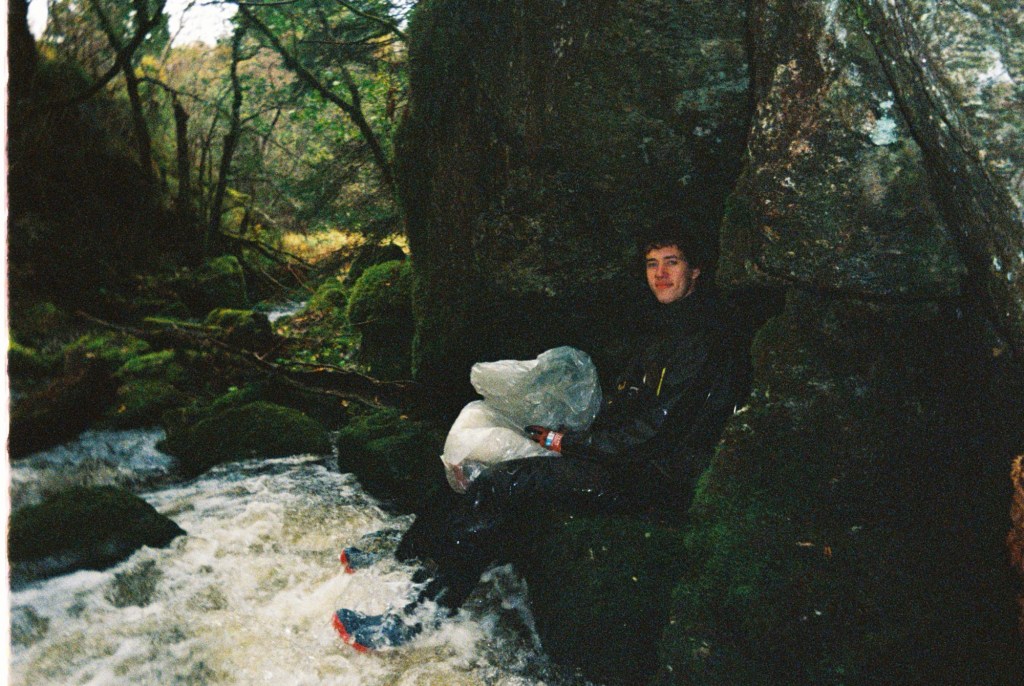
On October 8th, we had two groups moving down river and one moving up. I was cleaning with Tyra and we found some beautiful moss forest with a swing and lovely mushrooms. To preserve the endangered river mussels in Haukåselva, we avoided walking in the river and had to get creative on how to reach pieces in the middle.
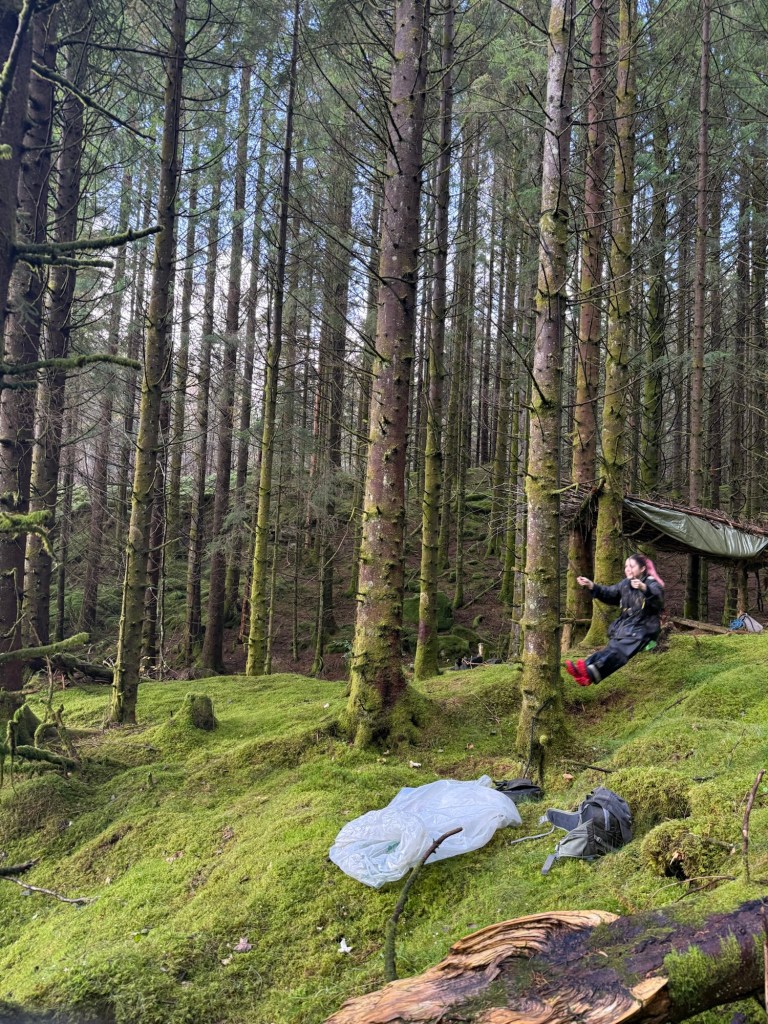
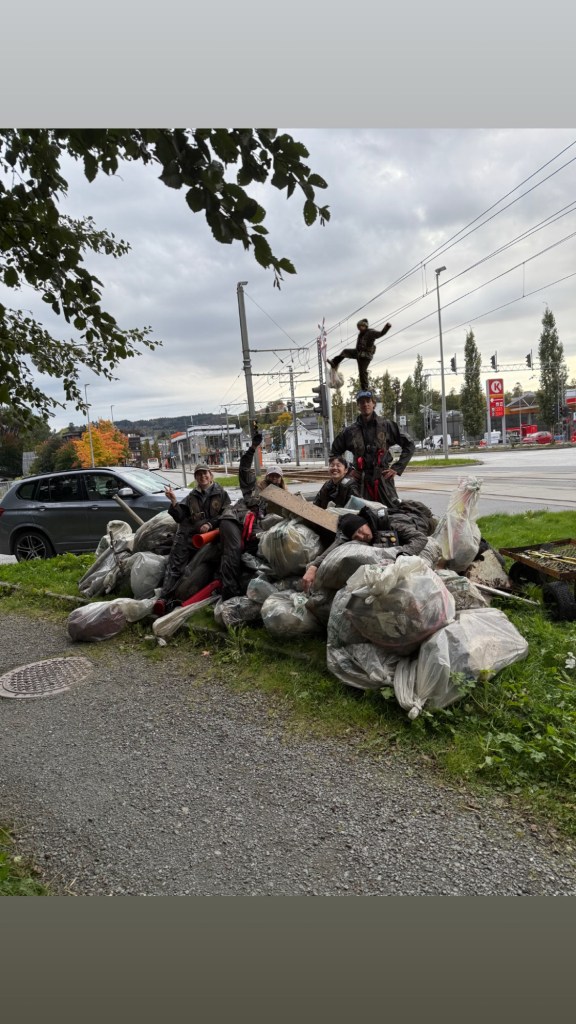
Unfortunately, the group moving upstream barely moved as they found a large private dumping site. There was piles upon piles of plastic tubing and pipes most likely from a deconstructed fish farm. We all worked together, packing out the endless tubes to a massive pile. The result was satisfying and truly disheartening.
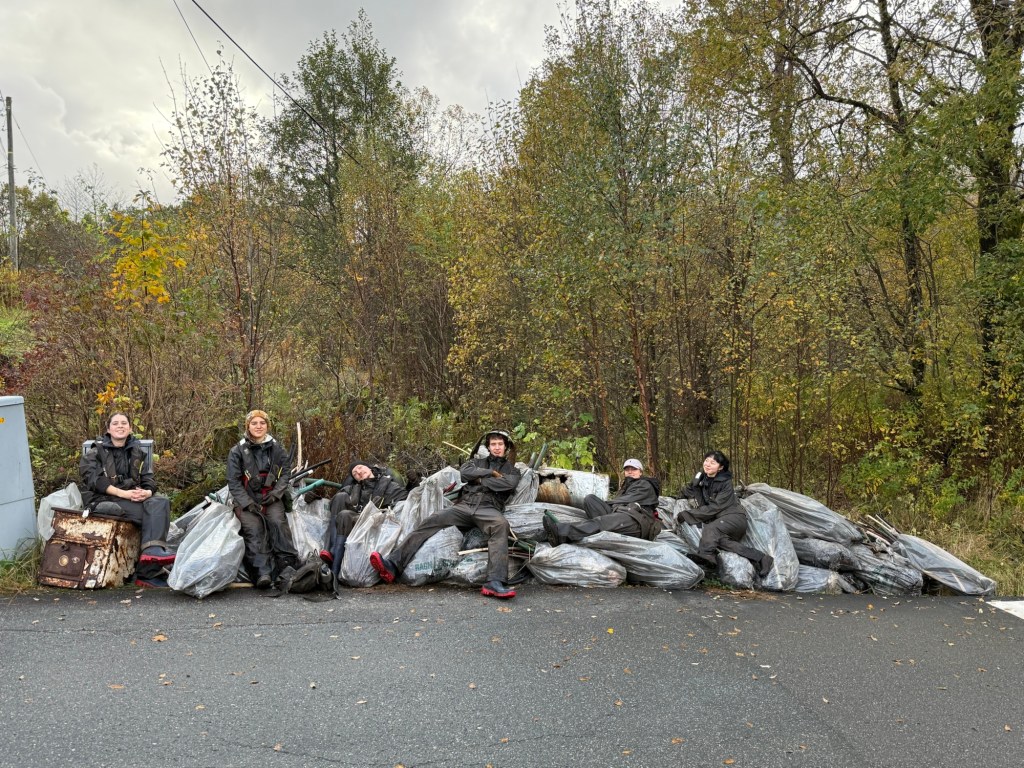
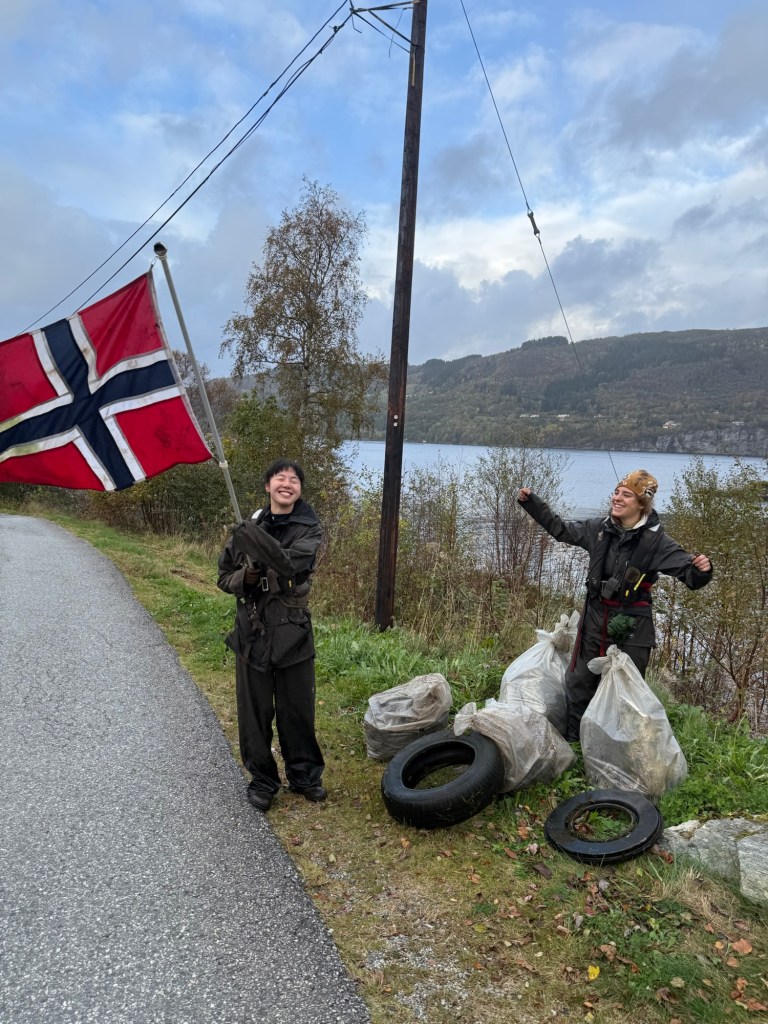
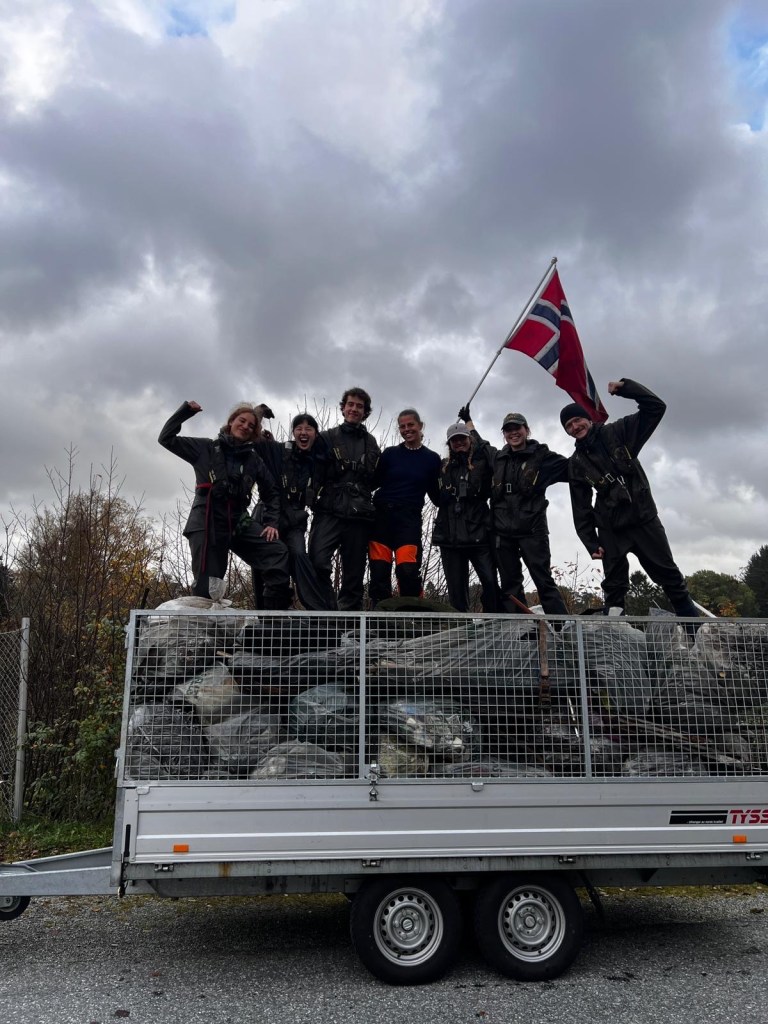
We then pushed on to the bay, the end point of our second to last river. Ellie and Tyra found a Norwegian flag and we waved it in celebration, standing upon a full trailer of 2280kg of trash.
Our route back happened to pass an IKEA, and I mentioned that it’s been a dream of mine to go. Kaja asked “Should we get meatballs for dinner at ikea??” We were all quick to shout “YES!!” And our dinner consisted of delightful Swedish meatballs nicely paid for on the NMF credit card.
Now I should mention that though it was tiring, we luckily had frequent rest days. I tended to be pretty bad at actually resting on my rest days as I saw them more as an opportunity for adventure, so now I’ll give a brief description of two “rest day” adventures.
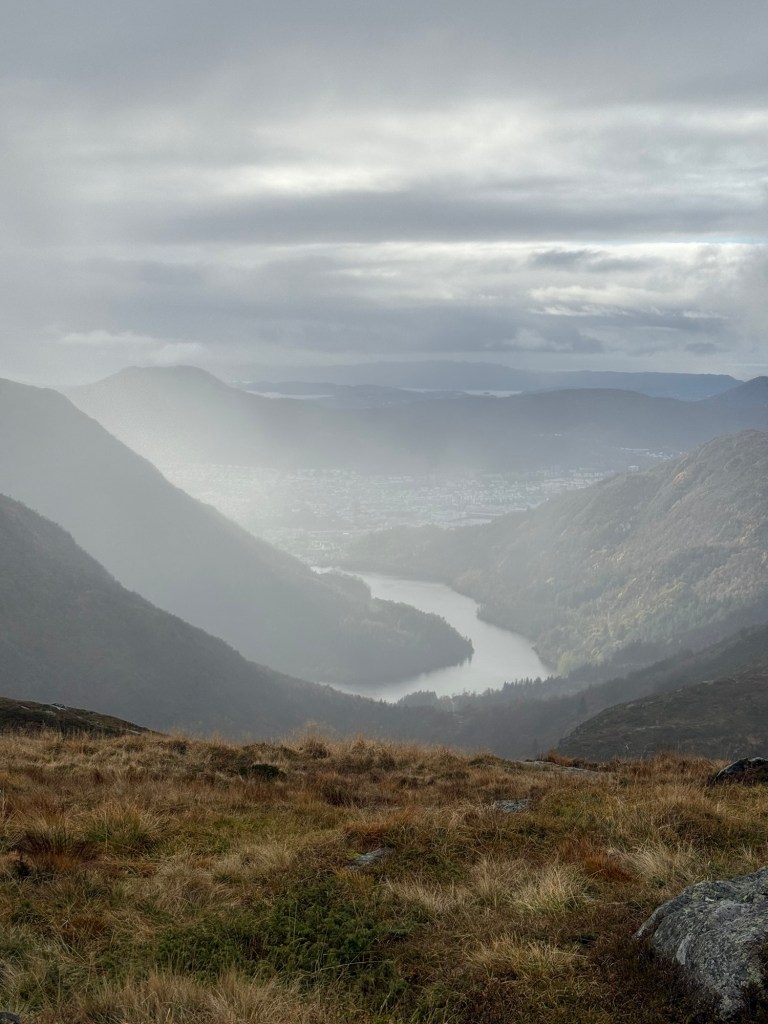
One lovely adventure was my traverse between two mountains above Bergen. On the way into the city, the group dropped me off at the trailhead. I climbed through the deciduous forest and slowly the wind picked up, giving way to bare stone and heather. I summited Ulriken and then made my way along the Vidden ridge. The cool fall breeze became violent above tree-line and brought in waves of sleet freezing my exposed legs and ears. I continued along, gradually descending, with splendid views of Bergen and the Archipelago that we helped clean on my left and Indre Arne and grander mountains to my right. I passed through mythical pine forests before reaching Fløyen and descending into Bergen. The 13 mile trail run had 3000 feet of elevation gain and took me three hours.
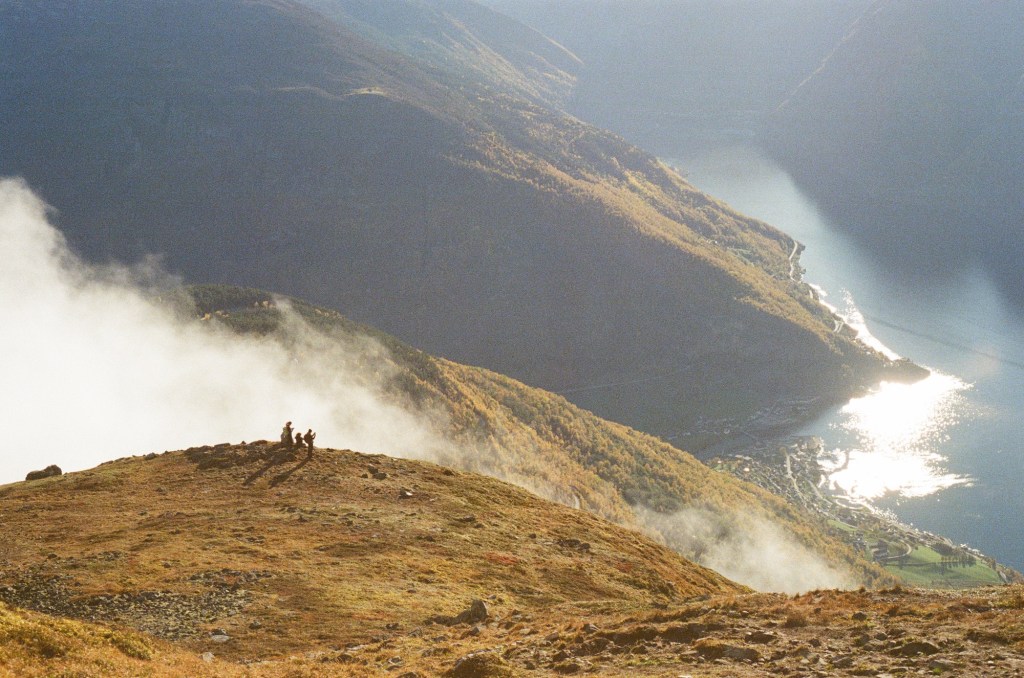
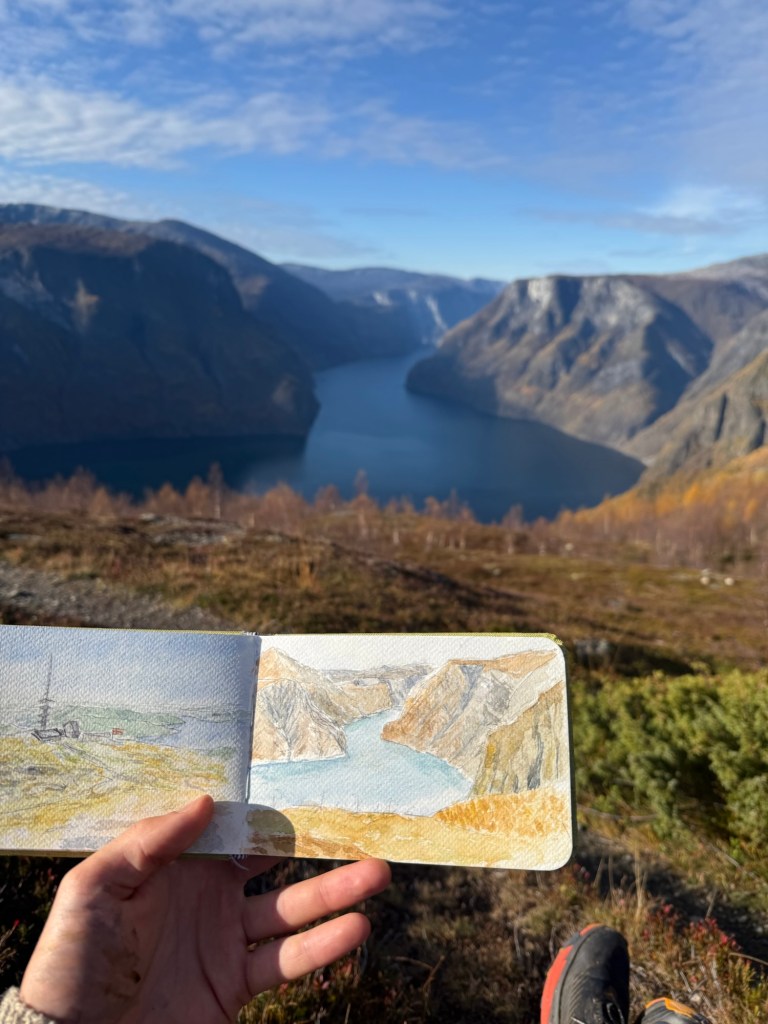
On a rest day in the middle of October, we left Bergen and headed north on a grand adventure. Our drive took twice as long as expected as the a necessary tunnel was closed due to maintenance, so we detoured along the Hardangerfjord. At 1pm, we finally arrived in Flåm, a small, touristy town at the end of Sogneford, the second longest fjord in the world. We hiked high above the water and sat upon the cushy heather. I ate my marmalade sandwiches while painting the view. The deep blue fjord turned and wrapped around the foliage speckled mountains that climbed more the 3000 feet from the sea. The sun came and went and came and went as small clouds moved by. Ferry boats transported below, and churned the calm water and left behind a curtain of waves. Ellie and I went ahead and summited Prest before we all descended. Flåm was magical and autumn is a very pleasant time to explore Norway. A good adventure.
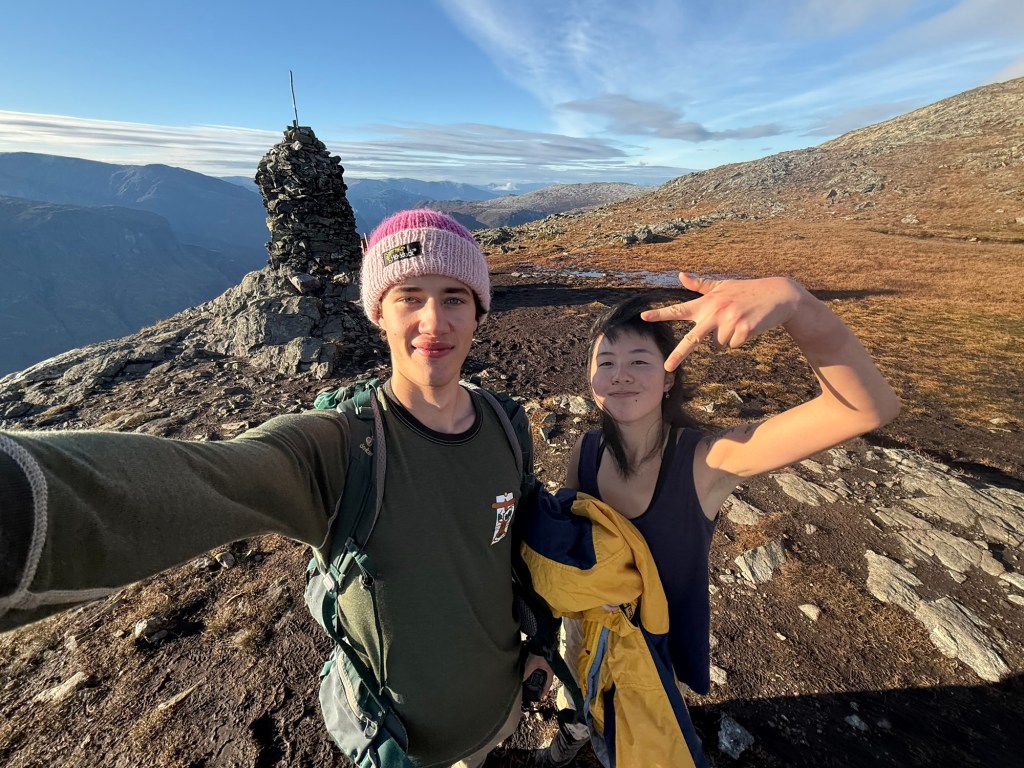
Our team became quite close from these grand adventures and bonding over tough cleaning days. We cooked together every night and played lots of music and card games. Florian was a serious advocate for morning swims, which I sometimes participated in. The lake was cold and got colder as winter approached. We also had movie nights together in the classroom. We got cozy with soft sheepskin, many pillows and watched the Secret Life of Walter Mitty and Night at the Museum.
Our final river, Oselva, was close to Seletun and one initial idea was to clean by canoe. We scoped out the river and quickly voted against that as about half was filled with strong white water and a handful of small waterfalls.
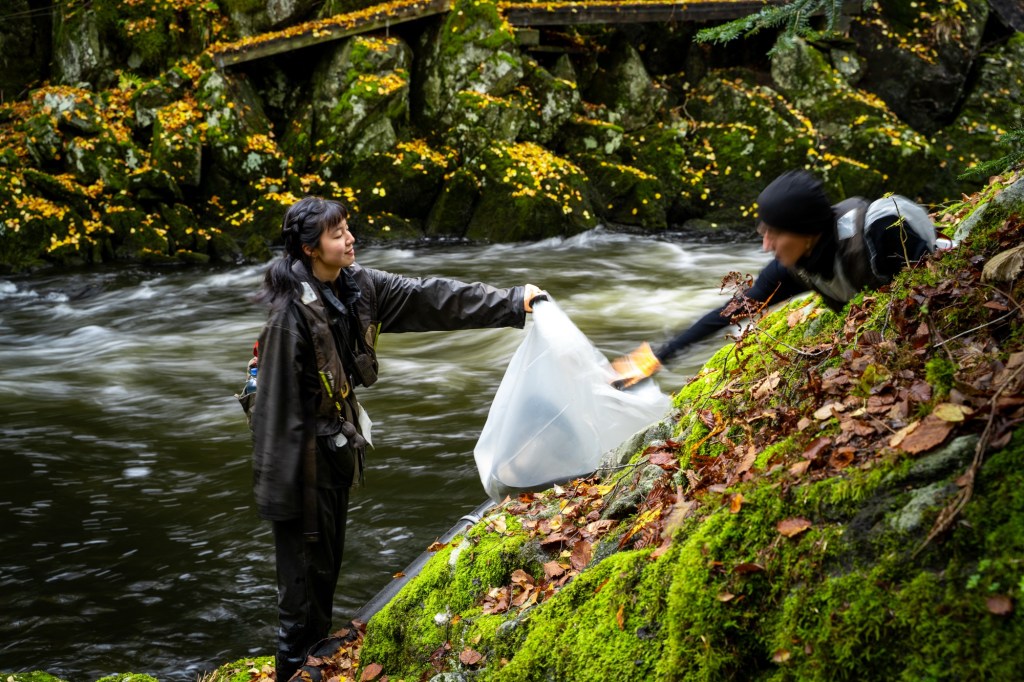
Oselva was primarily surrounded by forests with only the final third going through a small town. Most of our time cleaning was spent bushwhacking along nice riverbanks and clambering over cliffs when the river became steep instead of actually picking trash.
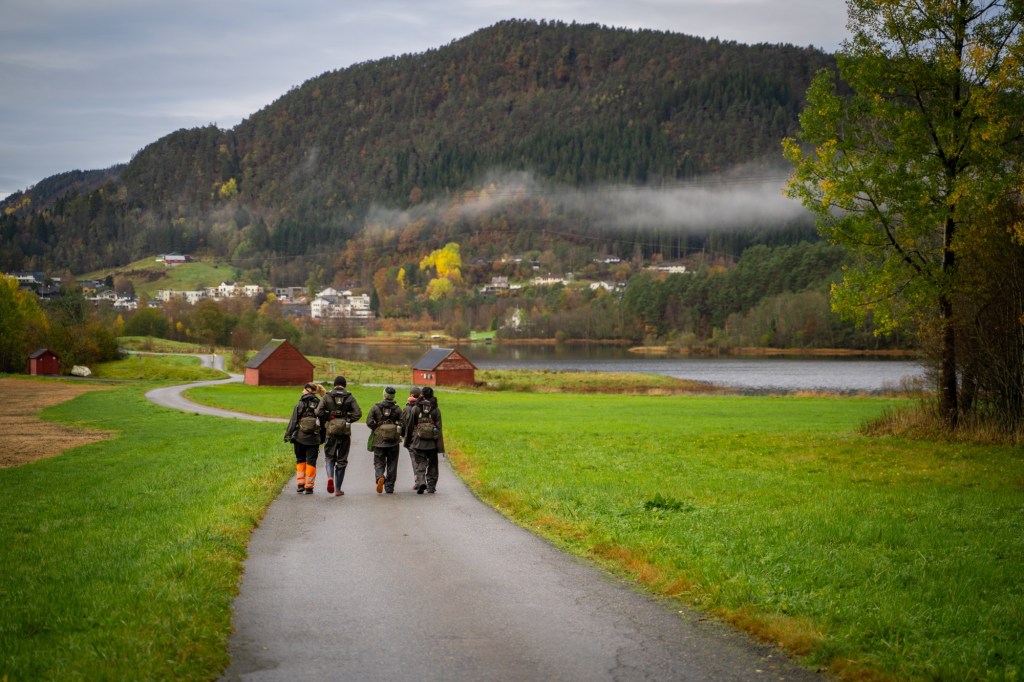
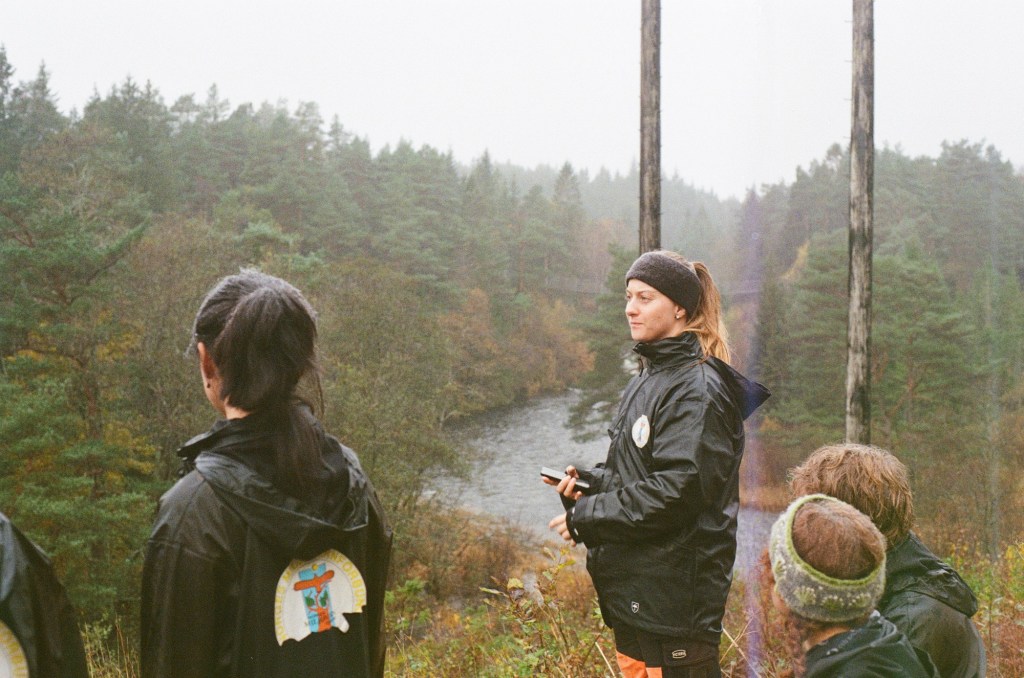
I did find a fully functional bike in the river bank and spent an entire lunch break whizzing around Osøyri with a very bent back wheel. There was a section in the middle of Oselva where the river slows and widens that we accessed by canoes on our final river cleaning day. Ellie and I began by paddling upstream to reach another trash island. We scanned every inch of the island and then I saw one small strip of land between the faster current that still needed to be cleaned. So we paddled hard down stream and planned to tap the nose of our canoe onto the tall grass of the island. The river ended up being much shallowed than expected and we beached ourselves in the middle of the river still 15 feet from the island. But when Ellie hopped out to walk to the island, the canoe rose and slowly began to move. I told Ellie this was our one chance to clean the island so she rushed over, found very little, and then ran back over shallow water, and hopped in the canoe. I released the oar that was magically holding us in place and we rocked the canoe until we had enough momentum to continue down the river. It was not our most graceful moment.
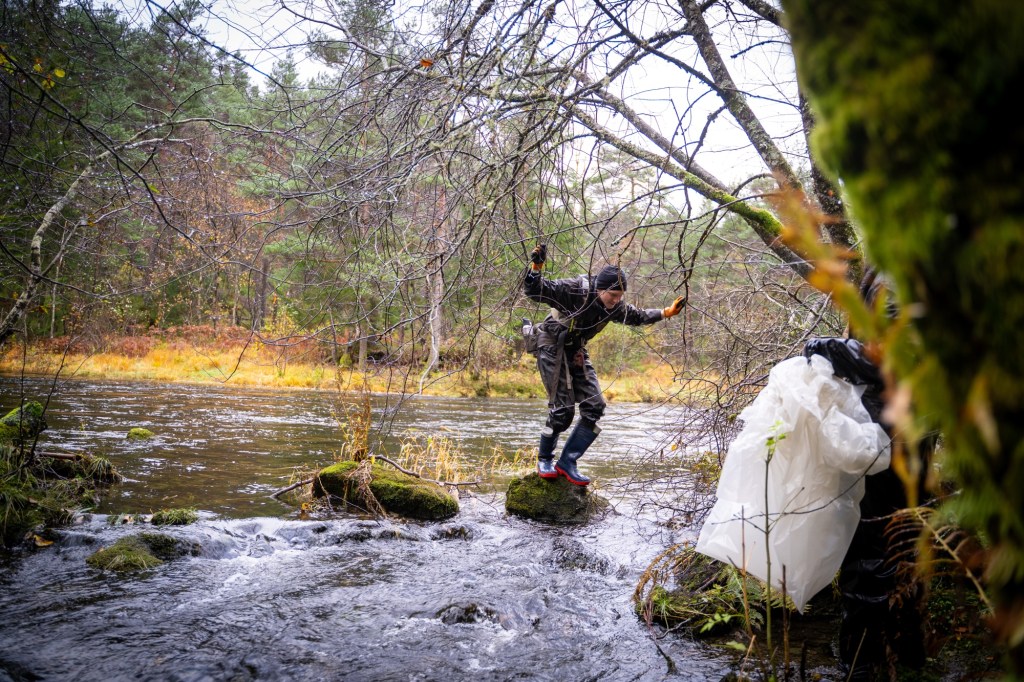
We then worked on land finishing the last sections of our final river. By this point I was simply exhausted and questioning my decision of river cleaning, but after a good rest, I felt our accomplishment of finishing all four rivers! In totally, we cleaned 7.4 tons or 16,300 pounds. The work was exhausting, but very rewarding. I felt good about my work and we could quickly see our progress. Our team’s success was made possible by Kaja’s strong leadership and the rest of our team’s dedication to our common goal. River cleaning with NMF was truly an incredible experience and I’d return in a heartbeat if another opportunity arose.


 Oliver Laxer's Adventure
Leave a reply to loudly5a85bcb0be Cancel reply